 By the Smili Phone team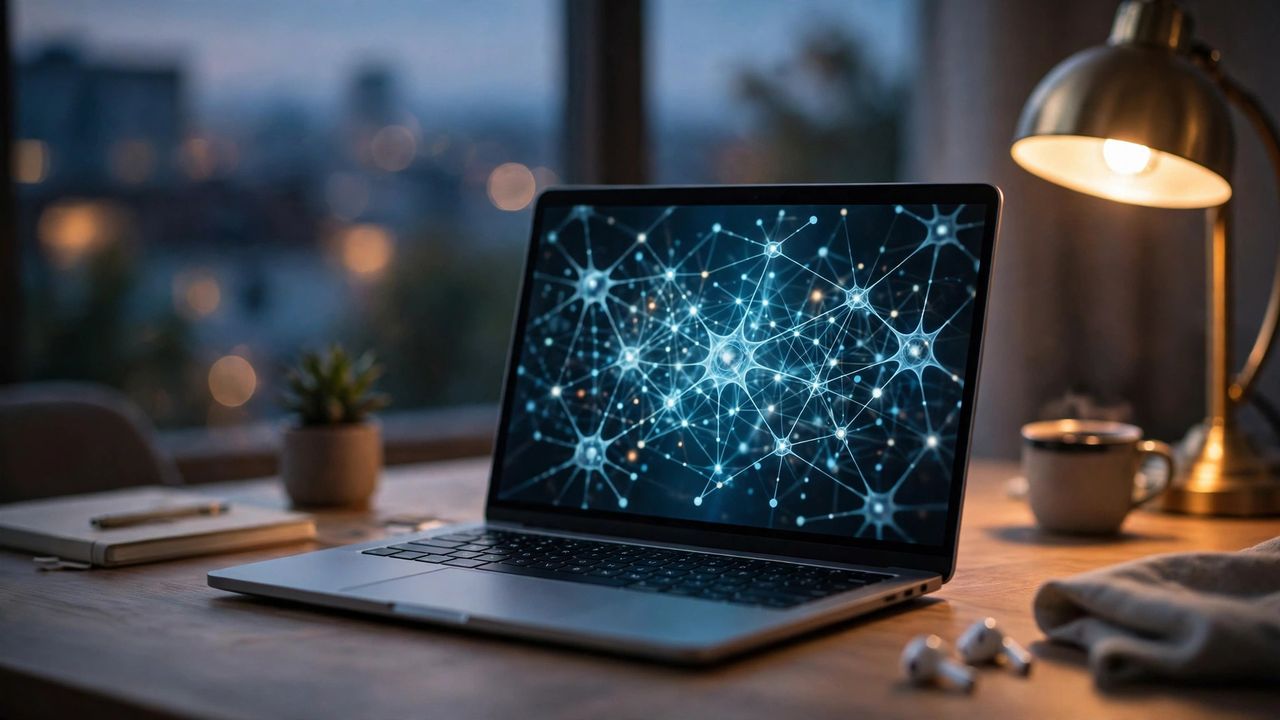
Big AI models used to live in someone else's data center. Every question you typed into a chatbot traveled over the internet to a cloud server, got processed on expensive hardware, and came back as an answer. This week, Salvatore Sanfilippo, the creator of the Redis database, released DS4, a small native engine that runs powerful AI models directly on a MacBook. It is part of a bigger shift worth understanding: AI that runs on your own computer, with no cloud account, no subscription, and no internet connection required.
What "local AI" actually means
With local AI, the model runs on your own machine instead of a remote server. Your questions, your documents, and your drafts never leave your laptop. The trick that made this possible is called quantization: a technique that shrinks a model by storing its internal numbers in much smaller pieces, so it needs far less memory. DS4 uses an aggressive 2-bit asymmetric quantization tuned for mixture-of-experts models like DeepSeek V4 Flash, Qwen3.8 Flash Next, and GLM variants, and it targets Apple Silicon and CUDA graphics cards. Early testers report strong real-world performance on 128GB M5 Max MacBooks, with long context windows holding up in practice.
Why people are excited
- Privacy. Nothing you type travels to a company server, so sensitive documents and personal notes stay on your device.
- It works offline. On a plane, in a cabin, or anywhere the Wi-Fi is terrible, local AI keeps answering questions.
- No monthly fee. Once you have the model files, every question is free. There is no per-message bill.
- Open and inspectable. DS4 is MIT-licensed, and this week the Allen Institute for AI open-sourced AstaBrief, an 8-billion-parameter model for generating reports. Anyone can look at the code and the weights.
What you actually need to try it
Local AI is hungry for memory, and that is the main gate. DS4 is aimed at Macs with generous unified memory, well beyond what most laptops ship with. Smaller open models can run on ordinary machines, but realistic expectations matter: the downloads are large, setup takes patience, and local models still make mistakes, just like their cloud cousins. The quality gap between a model that fits on your laptop and the biggest frontier models is real, though it keeps shrinking.
Why this matters even if you never install it
The direction of travel is what counts. AI is moving from a service you rent to software you own, the same way your calculator and your photo editor live on your own machine. That shift is good for privacy, good for people with unreliable internet, and good for anyone who likes their tools independent. And if you own a computer, it is worth knowing that the AI moment is no longer locked behind a cloud account. The data center fits on a desk now.
Related: what the FTC's AI agent probe means for you · what OpenAI's new AI agents can do