
 By the Smili Phone team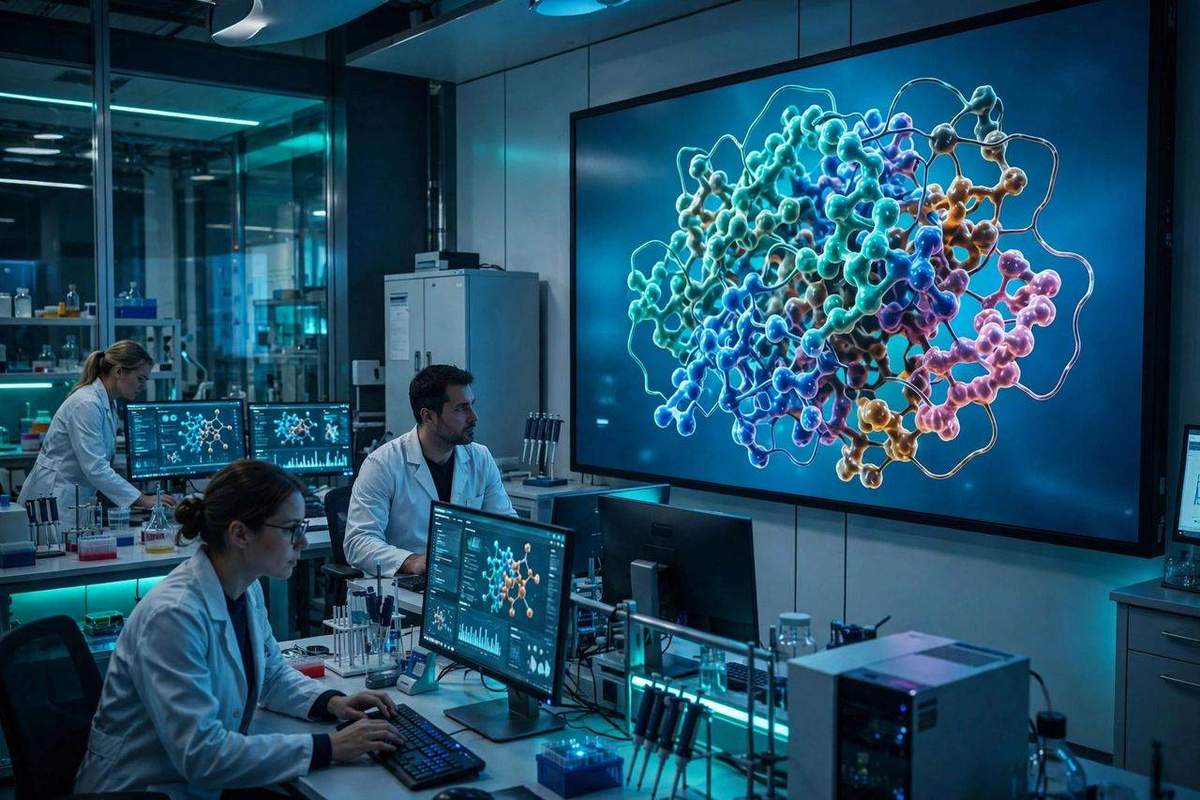
Most AI news these days is about chatbots and assistants. Today's story is about science instead. Google announced on Wednesday, October 14, that it will open its most advanced artificial intelligence models to 200 European researchers, handing them compute power and research tools that normally stay inside Google DeepMind and Google Cloud.
Not chatbots: these models do science
The researchers will get access to what Google calls its leading scientific tools. The best known is AlphaFold 3, the AI that predicts how proteins fold, work that sits at the heart of drug discovery and biology research. WeatherNext builds detailed meteorological forecasts. The rest of the package covers AlphaGenome for genetics, AlphaEvolve for working through hard scientific problems, and AlphaEarth Foundations for earth and geospatial data.
These models are a different animal from a chatbot. They need serious computing power, which is exactly why Google is supplying the compute along with the tools. As the company put it in its statement at an AI summit in Dublin, the goal is to accelerate the pace of European innovation and reinforce the continent's scientific competitiveness by putting vital compute power and state-of-the-art tools directly in researchers' hands.
Who gets in, and why now
The 200 researchers are being chosen by the European Commission under its Resource for AI Science in Europe program, known as RAISE. Europe has been pushing to keep pace in AI research, and access to world-class models and compute is one of the fastest ways to do it.
The timing matters too. Google noted that calls for stronger AI regulation have grown after a series of security incidents. Sharing powerful models with independent scientists is also a trust move: more researchers studying these systems means more eyes on how they behave and where they can go wrong.
What it means for the rest of us
Science AI has a habit of becoming everyday AI. Better protein models can speed up new medicines. Better forecasting models make the weather app on your phone more accurate. And techniques proven in the lab eventually land in the assistants we all talk to.
That is also why the phone in your pocket matters more than ever. AI features increasingly run on your device, not just in the cloud, and they need a phone that is healthy, updated, and charged. Here in Escondido, we see the flip side of that every day: phones slowed down by skipped updates or tired batteries trying to run the latest AI tools.
If your phone is struggling to keep up, bring it by 1882 W El Norte Pkwy before you assume you need a new one. Most performance problems are a repair away from being fixed.
Related: Google's AI Agent Got Its Own Work Email · Kill Switches for Every AI: Nadella's Plan